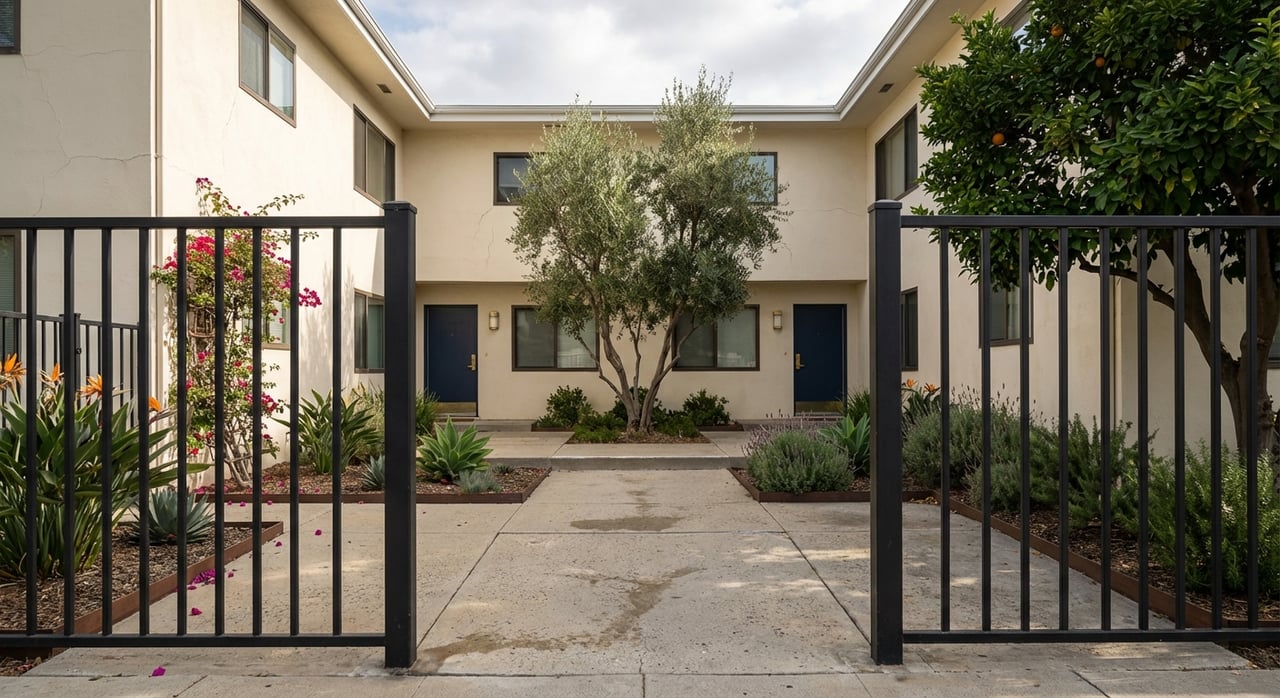
Thinking about buying a duplex, triplex, or fourplex in San Gabriel’s 91775? Prices are high, competition is real, and the details matter. The good news: steady rental demand and classic small buildings can make a smart long-term hold if you underwrite with care. In this guide, you’ll get current market context, zoning basics, quick math for cap rates, financing paths, and a due diligence checklist tailored to 91775. Let’s dive in.
San Gabriel at a glance in 2026
San Gabriel trades like an inner-ring San Gabriel Valley market with strong demand and limited supply. City-level median sale prices were reported around $1.3 million as of December 2025, which signals that small multifamily and residential land can command premium pricing.
Rents vary by data source. As of February 2026, several trackers show overall city rent medians in the low-to-mid $2,000s. For example, Zumper’s San Gabriel rent research has recent snapshots in that range, and RentCafe’s city-level averages have shown similar levels at times. Expect wide spreads between older garden units and newer or renovated product.
Cap rates in the Los Angeles metro have been in the mid-single digits. Institutional reports for late 2025 show LA multifamily in roughly the 4.5 to 5.6 percent band depending on asset class and location, per Kidder Mathews’ LA multifamily market report. Small 2 to 4 unit trades in San Gabriel may price around 4 to 6 percent depending on condition, upside, and financing. Metro fundamentals remain mixed but steady, with vacancy modestly higher than prior years yet still below national averages, and older workforce housing holding demand better than luxury supply in some areas, according to Matthews’ LA multifamily insight.
What this means for you: San Gabriel can be a strong long-term buy-and-hold or house-hack market, but it rewards thoughtful underwriting and disciplined offers.
What you can buy in 91775
Common buildings and vintages
You’ll find classic mid-century duplexes and small garden apartments, bungalow courts, and older walk-ups. Many buildings predate the 1970s, so plan for thorough inspections and potential system upgrades. If you plan significant renovations, review the city’s age profile and preservation context through the Historic Context Statement to understand how age or potential historic considerations may affect permits.
Zoning at a glance
San Gabriel uses straightforward residential zoning that controls where duplexes and small apartments are allowed. Key takeaways:
- R-1 is primarily single-family.
- R-2 allows low-density multiple family and is often where duplexes and triplexes fit. The city’s R-2 standards include a sample density of about 1 unit per 3,960 square feet of net lot area, typical parking at 2 spaces per unit, a 2-story or 35-foot height limit, and minimum unit sizes. See the city’s R-2 development regulations for practical details that affect unit mix and parking costs.
- R-3 permits higher-density multiple family. Mixed-use opportunities concentrate along Valley Boulevard and in the Mission District under specific plans. Start your research on the city’s Land Use & Zoning information hub for maps and handouts.
Tip: Always verify a parcel’s zoning and any specific plan overlays before you underwrite. Parking, open space, and unit-size rules can make or break your pro forma.
ADU and owner-occupant opportunities
If you plan to live in one unit and rent the others, San Gabriel’s R-2 and R-3 areas can be a good fit for owner-occupied financing. Some parcels may also allow accessory dwelling units based on state and local rules. Start with the city’s zoning resources, then confirm site specifics with the Planning Division before you model extra units.
How to underwrite a 2–4 unit
Set your baseline assumptions
When you build your first pass model, focus on a few inputs:
- Gross scheduled rent. Use current leases plus realistic market rent for any vacancies. As of February 2026, many 1 to 2 bedroom asking rents in San Gabriel fall between about $1,750 and $3,000 depending on building class and location. Validate with active listings and a local broker.
- Vacancy and collection loss. A conservative 5 to 8 percent works for stable small multifamily.
- Operating expenses. Small buildings often run higher expense ratios. A practical starting range is 30 to 50 percent of effective gross income based on age, utilities, and management.
- Property taxes. LA County’s base is roughly 1 percent of assessed value, plus local assessments. Verify on the assessor’s site once you have a target price.
- Reserves and turnover capex. Budget per-unit reserves for roofs, plumbing, HVAC, and future turns.
Quick cap rate math
Cap rate is net operating income divided by purchase price. It is a snapshot of yield, not total return. Here is an illustrative example:
- Market rent: $6,000 per month across both units = $72,000 per year.
- Vacancy/collection loss at 6 percent: effective gross income ≈ $67,680.
- Operating expenses at 40 percent of EGI: ≈ $27,072.
- NOI: ≈ $40,608.
If similar small properties trade near a 5.0 percent cap, value would pencil around $812,000 (NOI / 0.05). If cap rates move to 6.0 percent, that value shifts to about $676,800. Small changes in expenses or exit cap assumptions can move value a lot, so model both a conservative and an upside case.
Sanity-check your rents and comps
Rents vary by building age and finish level. Cross-check asking rents using a current source like Zumper’s San Gabriel rent research, then ground-truth with on-the-ground tours and neighborhood-specific comps. For cap rate benchmarks, use recent small-lot sales nearby, not just metro-wide averages.
Financing paths for small investors
FHA for owner-occupied 1–4 units
If you plan to occupy one unit as your primary residence, FHA-insured loans can offer a lower down payment on 2 to 4 unit properties, subject to guidelines for reserves and rental income treatment. Review the rules in HUD’s Single Family Housing Policy Handbook (4000.1) here: HUD FHA Handbook 4000.1.
Conventional loans for 2–4 units
Many lenders offer owner-occupied and non-owner-occupied financing on 2 to 4 units with different down payment, reserve, and rate structures than single-family homes. Expect rates to be higher than primary single-family loans but still competitive. Shop local banks and mortgage brokers who frequently close small multifamily in the SGV.
Commercial loans for 5+ units
If your target is 5 units or more, underwrite with commercial lenders. Expect debt service coverage, in-place NOI, and lease quality to drive proceeds. Local banks, agencies, and bridge lenders are all common paths depending on condition and business plan.
Due diligence checklist for 91775 acquisitions
A) Financial and lease diligence
- Rent roll and leases. Confirm deposits, tenant-paid utilities, any concessions, and lease terms.
- Trailing financials. Request 12 to 24 months of P&L and bank statements to validate collections and expenses.
- Property taxes and assessments. Pull the current bill and look at historical changes under Prop 13.
- Utilities. Ask for water, sewer, trash, electric, and gas histories, and confirm which units are separately metered.
- Capital expenditures. Document roof, plumbing, electrical, HVAC, and major repairs to forecast a 5 to 10 year capex plan.
- Compliance. Check for any open code enforcement or tenant complaints.
B) Physical inspection and systems
- Exterior and structure. Inspect roof, gutters, siding, windows, and visible foundation conditions.
- Moisture, pests, and termites. Older SoCal buildings often need termite treatment or repair.
- Electrical. Identify obsolete wiring or low-capacity panels that may require upgrades.
- Plumbing. Scope lines if possible, especially in older properties.
- HVAC. Note age, permits, and efficiency.
- Life safety and seismic. Confirm smoke detectors, egress, required separations, and evaluate for soft-story or retrofit needs.
- Environmental materials. Pre-1978 buildings trigger federal lead-based paint disclosures. Asbestos may be present in some materials; follow applicable rules for renovation.
C) Legal, title, and regulatory
- Title and survey. Check legal descriptions, easements, and that units are legal and permitted.
- Certificates and permits. Verify certificates of occupancy and any conversions.
- Zoning and overlays. Confirm R-2 or R-3 and any specific plan rules for parking or height. Start with the city’s Land Use & Zoning information and R-2 handout.
- State rent law. Review California’s Tenant Protection Act (AB 1482) to see whether caps and just-cause rules apply or if exemptions fit your property type or ownership scenario: AB 1482 bill text.
- Transfer tax. LA County documentary transfer tax applies; some cities add a city tax. San Gabriel is not listed among cities with an added tax, but confirm details at the LA County Recorder’s guide.
D) Environmental and neighborhood context
- Environmental screening. For larger or financed purchases, consider a Phase I to review historical uses and nearby risk sites.
- Area plans. Review the Valley Boulevard and Mission District specific plans for future development patterns that can influence supply and neighborhood character. Start with the city’s zoning portal for maps and documents.
E) Permitting and entitlements
- Additions and ADUs. If you plan to add units or convert space, confirm ADU rules, parking waivers, and development standards early.
- Historic resources. Check the Historic Context Statement if the building is older or sits near historic areas.
F) Insurance and occupancy
- Coverage and pricing. Older or larger buildings can face higher premiums. Compare carriers and confirm landlord, liability, and rent loss coverage.
- Earthquake insurance. Evaluate earthquake risk and premium trade-offs common to Southern California.
How San Gabriel fits your SoCal strategy
San Gabriel sits close to job centers and major corridors, which supports steady renter demand. It usually prices above inland markets, so you trade a lower initial yield for stability and potential appreciation. Regional reporting shows cap rates that are compressed versus inland metros, reinforcing a buy, improve, and hold approach rather than quick flips. For many investors, a house-hack duplex or a light value-add 3 to 4 unit is a smart entry.
To position your purchase well:
- Start with an owner-occupied 2 to 4 unit if that fits your life and financing goals. FHA can help you scale entry costs while you learn operations.
- Model conservative cases first. Use 5 to 8 percent vacancy, 35 to 45 percent expense ratios for older stock, and a cap rate that reflects small-lot trades nearby.
- Focus on controllable value-add. Interior turns, in-unit laundry, and parking efficiency often create durable uplift without complex entitlements.
Next steps
If you are eyeing a duplex, triplex, or fourplex in 91775, you do not have to navigate the details alone. Our team pairs neighborhood expertise with investor-minded underwriting so you can buy with confidence and plan your hold. Ready to run numbers on a specific property or map a step-by-step plan? Schedule a consultation with Joy Realty Group.
FAQs
What cap rate should I expect for small multifamily in San Gabriel in 2026?
- LA metro reports showed mid-single-digit caps in late 2025; small 2 to 4 unit trades in San Gabriel commonly underwrite around 4 to 6 percent depending on condition, upside, and financing.
What are typical rents in San Gabriel 91775 as of February 2026?
- City-level trackers show overall medians roughly $2,400 to $2,800, with 1 and 2 bedroom asking rents often between about $1,750 and $3,000 depending on building class and location.
Can I use FHA to buy a duplex in San Gabriel if I live in one unit?
- Yes, FHA insures 1 to 4 unit owner-occupied purchases subject to Handbook 4000.1 guidelines, including reserve and rental income rules.
Does California’s AB 1482 rent law apply to my duplex?
- Many units are covered by AB 1482 rent caps and just-cause rules, but some exemptions exist (such as newer construction or certain owner-occupied scenarios), so verify for the specific property.
Where can I confirm the zoning for a San Gabriel property?
- Start with the city’s Land Use & Zoning information page for maps and R-1/R-2/R-3 handouts, then confirm parcel details with the Planning Division before you underwrite.