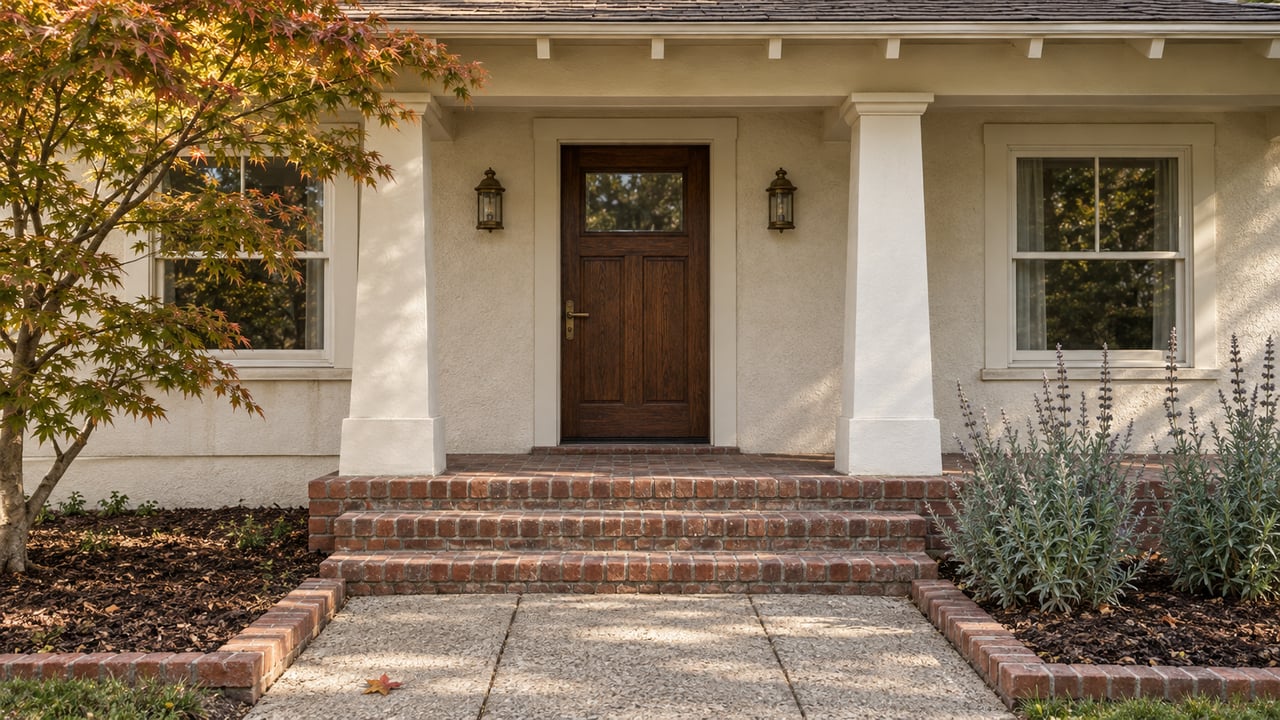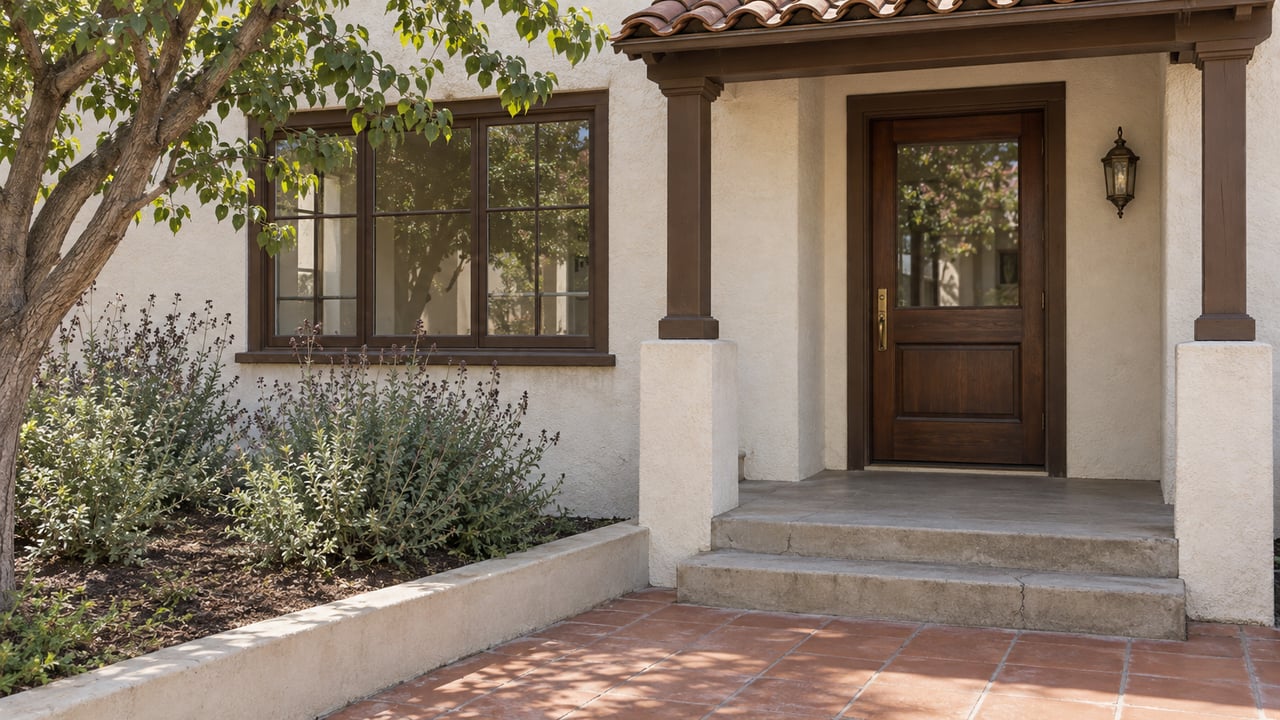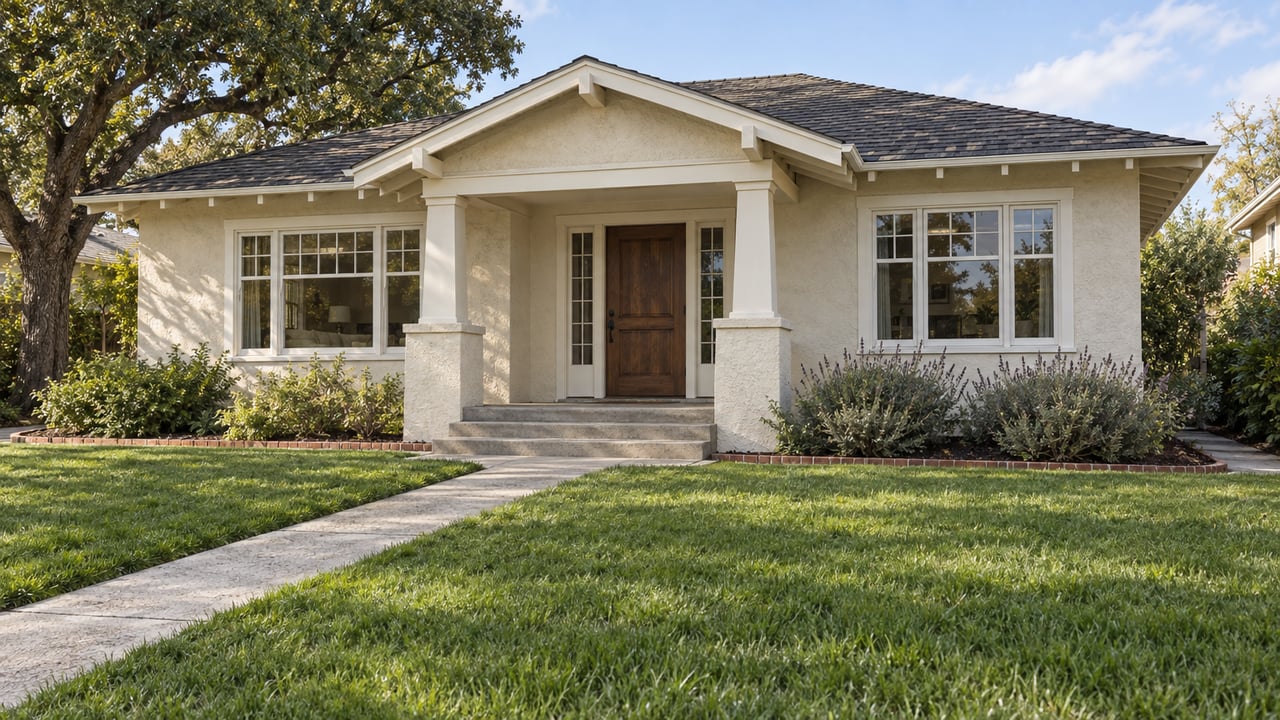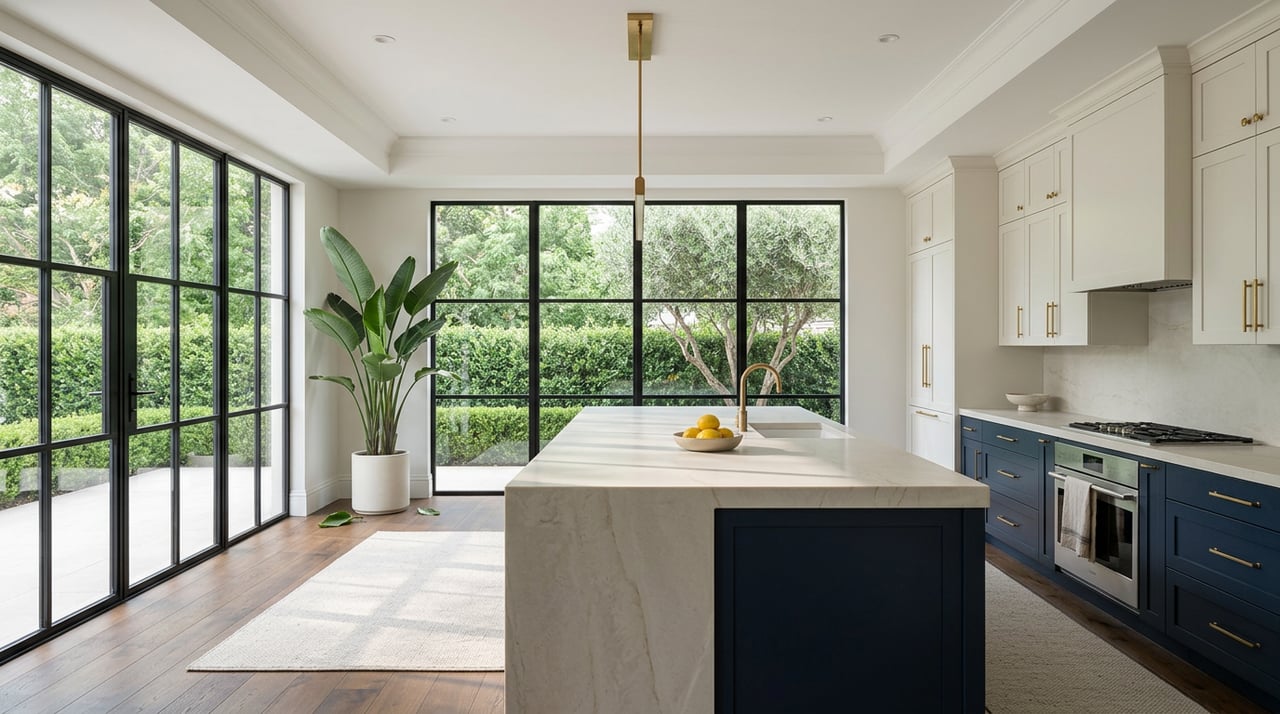
Two open houses, same Saturday, both inside Arcadia Unified boundaries. One is a 2,400-square-foot single-family home in San Gabriel. The other is a 2,400-square-foot single-family home in Arcadia proper. The Arcadia listing is priced roughly $420,000 higher. A buyer running quick math assumes Arcadia commands a steep premium per square foot, the kind of markup that shows up when a market is simply more expensive to build in or more competitive to win in.
Pull the price-per-square-foot numbers for the second quarter of 2026 and that assumption falls apart. Arcadia's quarterly aggregate ran about $782 per square foot. San Gabriel's ran about $763. That's a gap of roughly two percent, not the kind of spread that explains a $420,000 difference in sale price. Something else is doing the work, and it isn't the cost of the square foot itself.
Same Rate, Different Bill
Here's the comparison that actually matters, using Q2 2026 CRMLS-sourced figures for single-family homes across the three cities:
| City | Price per sq. ft. (Q2 2026) | Typical total price comparison |
|---|---|---|
| San Gabriel | ~$763 | baseline |
| Arcadia | ~$782 | ~$420,000 higher |
| Alhambra | ~$698 | Arcadia runs ~$740,000 higher |
The rate barely moves. The total moves a lot. If Arcadia and San Gabriel charged buyers the same amount for every additional foot, the entire premium would have to come from somewhere other than price efficiency. It comes from size. Arcadia homes, on average, are simply bigger, and they sit on bigger lots. You aren't paying more for the same house. You're buying a larger house on a larger parcel, and the total reflects that, not a scarcity tax on the material itself.
It's Not Better Materials. It's More Land.
Walk the boundaries and the size story gets specific fast. Upper Rancho sits north of Foothill Boulevard and east of Santa Anita Avenue, and it carries the largest residential lots in the city, often a half acre to a full acre, with price points from $3 million to $8 million and beyond. Lower Rancho sits south of Foothill and west of Santa Anita, with somewhat smaller lots but still substantial estate-scale homes in the $2 million to $5 million range. Both areas sell well above the citywide median, and both do it primarily through acreage, not through a premium construction cost per square foot.
This is the part that trips up buyers moving from a flatter, smaller-lot market. A $2.5 million home in Lower Rancho and a $1.8 million home closer to the Monrovia border can carry nearly identical finish quality and a nearly identical price per square foot. What separates them is the size of the structure and the size of the dirt underneath it, not a materials upgrade or a better contractor.
The Teardown Wave Behind the Numbers
The size story has a visible driver on the ground: a sustained wave of teardown-rebuild activity that has reshaped entire streets in Upper Rancho, Santa Anita Oaks, and parts of Lower Rancho. Older ranch and mid-century homes are coming down and new construction mansions in transitional styles are going up in their place, typically listing in the $2.2 million to $4.5 million range.
This matters for the price-per-square-foot math because new construction doesn't necessarily cost more per foot to build than a well-finished remodel. What it does is add square footage, often two or three times the footprint of the home it replaced, on a lot that was already large to begin with. Every rebuild that goes up pushes the average size of an Arcadia home higher, and average size, not average finish quality, is what's inflating the total price relative to neighboring cities.
If you're touring Arcadia and comparing it to San Gabriel or Alhambra on total price alone, you're comparing markets that are pricing square footage similarly but selling very different amounts of it.
The Tax Bill Nobody Prices In
Here's where the math gets more complicated for anyone actually considering a teardown lot rather than a finished new build. Under California's property tax system, a change in ownership resets a property's assessed value to its purchase price, and that new base then grows by no more than two percent a year, as the State Board of Equalization explains. That much applies to any sale, in any city.
New construction adds a second layer. The Santa Clara County Assessor explains that when a demolished home is replaced with a new one, the completed structure is reassessed separately at its market value as of the date construction finishes, and that value is added on top of the land's already-reset base. In practice, a buyer who purchases a teardown lot in Arcadia is not locking in a lower long-term tax basis by building instead of buying finished. The land resets at purchase. The new structure resets again at completion.
This is a real number to run before assuming a teardown is the cheaper long-term play compared to buying an already-completed new build where the seller absorbed that second reassessment years earlier. It isn't tax advice, and anyone weighing a project like this should talk to a tax professional about their specific parcel, but it's a mechanic worth knowing before you fall in love with a lot.
The School Boundary Catch
One more friction point that has nothing to do with school quality and everything to do with geography: Arcadia Unified's attendance boundaries don't track neighborhood lines. A home on one side of a street can pull into a different elementary school than a home on the other side, regardless of price or neighborhood name. Buyers who care about a specific school assignment need to verify the boundary at the exact address, not the general area, before they get attached to a listing.
Where the Premium Loosens
The size-driven premium isn't uniform across the city. Southern Arcadia, near the Monrovia border and around the Baldwin Stocker area, carries smaller lots and older homes, with entry points starting around $1.1 million to $1.5 million. That's still Arcadia address, still Arcadia Unified boundaries in many cases, at a size and price tier closer to what a San Gabriel or Alhambra buyer might expect. If the goal is the district and the city without the acreage-driven premium, this is where the math loosens up.
A Few Questions Buyers Ask Us Directly
Is Arcadia's higher price just about school quality? Schools are part of the demand story, but the price-per-square-foot data shows the premium is mostly a size story. Two homes with similar finish quality and similar per-foot pricing can have very different total prices simply because one sits on more land.
If I buy a teardown lot, do I save on property taxes by building myself instead of buying a finished new construction home? Not automatically. The land resets to your purchase price at the time of sale, and the completed structure gets its own reassessment at market value when construction finishes. Run both scenarios with a tax professional before assuming one path saves money long term.
Where in Arcadia can I get more house for less? Southern Arcadia near the Baldwin Stocker area and the Monrovia border tends to offer smaller lots and older homes at a meaningfully lower entry point than Upper Rancho or Santa Anita Oaks, while often still landing inside Arcadia Unified boundaries.
If you're weighing an Arcadia purchase against San Gabriel or Alhambra, the number to run isn't the total price. It's the price per square foot next to the actual square footage, lot included. That comparison tells you whether you're paying for land, paying for a rebuild premium, or paying for something else entirely, and it changes how you negotiate.
Joy Realty Group works this exact math with buyers and sellers across Arcadia and the wider San Gabriel Valley every week, from Upper Rancho estates to the more accessible corridors near the Monrovia line. If you want a clear-eyed read on what a specific Arcadia address is actually charging you for, schedule a consultation or start with our Arcadia neighborhood guide and buyer's guide.