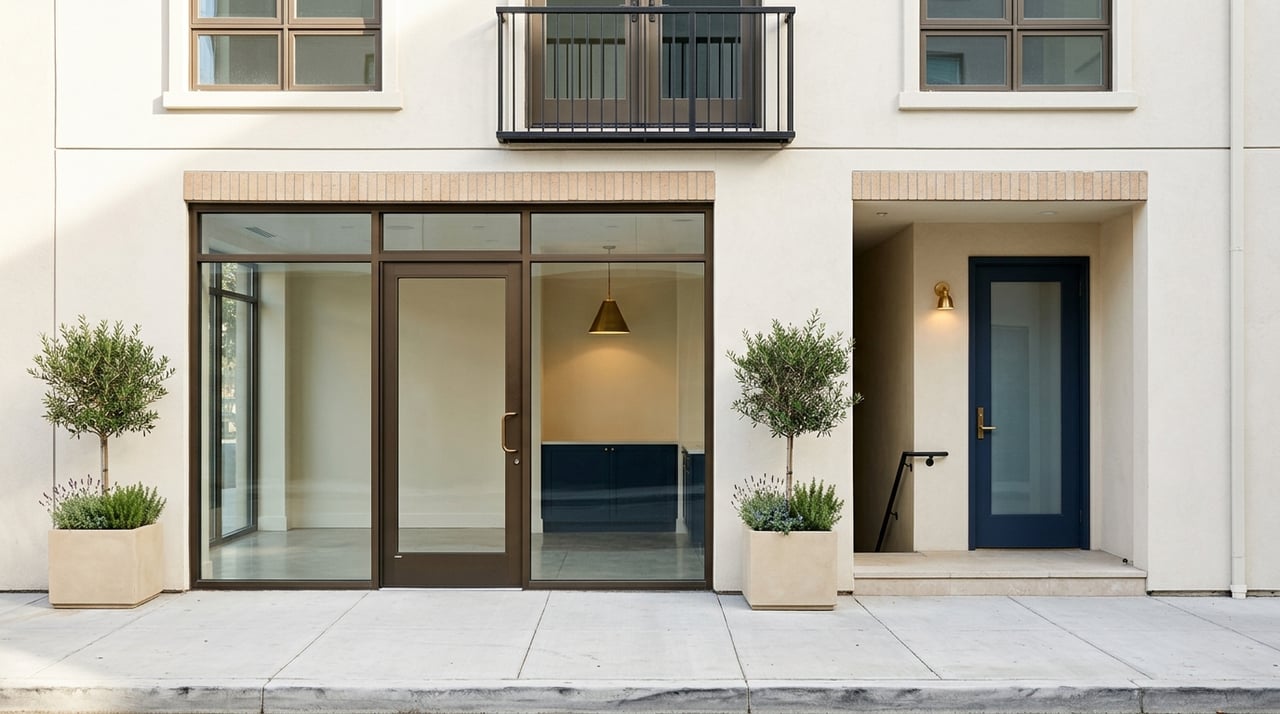
If you are eyeing a mixed-use property in Downtown Pasadena, the real question is not whether the concept sounds exciting. It is whether the building, the block, and your goals actually line up. Whether you are an owner-user, a live-work buyer, or an investor looking for income, understanding how Downtown Pasadena handles mixed-use can help you avoid expensive surprises and spot the right opportunities. Let’s dive in.
What mixed-use means downtown
In Downtown Pasadena, mixed-use usually means a building that combines commercial and residential uses in the same structure. Under the city’s current Central District Specific Plan, the residential portion is generally located above or behind the nonresidential space. The plan also recognizes work-live and loft formats, which gives buyers a little more flexibility depending on the property.
In practical terms, that often looks like retail, restaurant, or service space at street level, with apartments, condos, offices, or work-live units above. That format is not accidental. Pasadena’s downtown plan is designed to support an active street environment while still allowing housing and other uses to be layered into the same property.
Why location matters so much
Not every part of Downtown Pasadena works the same way for mixed-use. The city’s plan supports higher-intensity development along major commercial corridors and near transit, while some character-sensitive areas are kept at lower intensity. That means your results can change significantly from one subdistrict to another.
Old Pasadena considerations
Old Pasadena is described by the city as the historic core and a major retail and entertainment destination. Residential uses there are generally limited to mixed-use buildings with commercial space on the ground floor. It is also served by two A Line rail stops and includes more than 300 businesses, which can support foot traffic and visibility.
For some buyers, that can create a strong case for retail-forward mixed-use. For others, it also means tighter design expectations and a need to think carefully about how the commercial space will perform over time.
Playhouse Village and Civic Center factors
Playhouse Village is framed by the city as a crossroads of culture, commerce, and community. City materials note about 24,000 workers within a half mile and more than 45 nearby restaurants, bars, and coffee shops. That kind of activity can support demand, but tenant mix and exact block still matter.
The Civic Center tells a different story. The city notes active redevelopment in the area and highlights The Paseo as an open-air urban village. At the same time, retail vacancy conditions have been much softer there than in some other downtown subareas, so buyers should not assume all downtown locations perform equally.
South Lake strengths
South Lake is described as a low- to medium-intensity retail and mixed-use corridor with office, retail, restaurant, and mixed-commercial uses. The city also identifies it as a corporate center, with a daytime population above 56,000 and surrounding household incomes above $100,000. For a buyer who wants strong daytime activity, this can make South Lake worth a close look.
Ground-floor rules can shape your options
One of the biggest things buyers miss is that Downtown Pasadena mixed-use is shaped by local street-level rules, not just broad zoning labels. In parts of the downtown core, housing is intentionally kept off the ground floor to preserve active retail frontage. This is especially true along corridors such as Colorado Boulevard, Green Street, and Lake Avenue.
The city also places restrictions on certain uses within 35 feet of the sidewalk line along those major frontages. On top of that, the plan requires a minimum ground-floor height of 15 feet. These rules help explain why mixed-use buildings downtown often feel more urban and commercial in character than a smaller apartment property with a storefront attached.
For you as a buyer, this means a property may offer less flexibility than it appears at first glance. A building that seems ideal on paper may still face limitations based on frontage, design, and use mix.
Parking and design affect costs
Parking is another major variable in Downtown Pasadena. The city encourages parking to be set back from the street, favors subterranean parking, and expects structured parking to be visually integrated into the main building. Along primary frontages, parking structures are expected to be lined with non-parking uses for a minimum depth.
That approach supports a better pedestrian environment, but it can also raise development or repositioning costs. If you are looking at a redevelopment play, a major renovation, or a build-to-own opportunity, parking design can become a meaningful part of your budget and timeline.
Entitlement steps can add friction
If the property will be newly built or substantially altered, design review is often part of the process in Pasadena for new nonresidential, mixed-use, or multifamily projects. The city’s process generally starts with preliminary consultation, then moves through concept and final design review. That is not necessarily a deal breaker, but it does add time and coordination.
There can be other requirements too. For example, a master sign plan may be needed when six or more nonresidential tenant spaces exist on one property. For a buyer planning to improve or reposition a larger mixed-use asset, that kind of detail matters because it can affect both timing and cost.
Inclusionary housing can impact redevelopment
If your strategy involves development or a major mixed-use residential project, Pasadena’s inclusionary housing rules deserve careful attention. The city applies its inclusionary housing ordinance to residential and mixed-use projects of 10 or more units. In those cases, 15% of newly constructed units must be affordable, unless an approved alternative such as off-site construction, site donation, or an in-lieu fee is used.
For long-term investors and owner-developers, this is one of those rules that can materially change a pro forma. If you are buying an existing building for income, it may be less central. If you are buying for redevelopment, it can be a major planning item from day one.
Financing depends on how you plan to use it
Mixed-use properties often attract buyers because they seem to offer flexibility. That is true, but financing can be very different depending on whether you plan to occupy part of the building yourself or hold it mainly as an investment.
When owner-users may have an edge
For owner-users, SBA financing can sometimes be a fit. The SBA’s 504 program offers long-term, fixed-rate financing for major fixed assets such as buildings and land, but it cannot be used for speculation or investment in rental real estate. The SBA’s 7(a) program can be used to acquire, refinance, or improve real estate and buildings.
For owner-occupied mixed-use property, occupancy rules matter. SBA Form 1920 shows that an existing building must generally be occupied by the applicant or operating company for at least 51% of the rentable property, while new construction generally requires 60% permanent occupancy. So if you truly plan to run your own business from a meaningful share of the property, mixed-use may pencil out more easily than it would for a passive investor.
What lenders often watch closely
Commercial lenders also care about where repayment will come from. The OCC notes that for owner-occupied commercial real estate, the primary repayment source is usually the cash flow of the occupying business. If 50% or more of repayment comes from third-party rental income, the property is generally treated as non-owner-occupied.
That matters because underwriting for mixed-use is often more layered than underwriting for a straightforward apartment building. Lenders may focus heavily on net operating income, capitalization rates, appraisals, collateral, and the durability of the tenant mix.
Downtown Pasadena offers both upside and risk
Pasadena as a whole has a broad commercial base. The city reports more than 1,600 retail businesses and more than 700 restaurants, and its economic strategy positions Pasadena as a regional shopping and dining destination. Citywide retail vacancy was reported at 5.5% in the strategy snapshot, which points to a fairly active market overall.
But downtown is more nuanced. In Quadrant B, which includes Old Pasadena, Playhouse Village, the Civic Center, and South Lake, retail vacancy was reported at 7.8%. Within that group, Playhouse Village was reported at 1.2% vacancy, while Civic Center was much softer at 30.5%. That is a big reminder that your exact block and tenant strategy matter as much as the downtown label.
The office side also deserves caution. CBRE’s Q4 2025 Pasadena office report showed 23.4% overall office vacancy and 27.3% overall availability, with negative quarterly absorption. At the same time, CBRE noted that retail construction has remained limited because of higher costs, while retail rents are expected to continue rising due to stronger fundamentals and constrained supply.
If you are considering a mixed-use asset with a heavy office component, that may call for more conservative underwriting. If the property leans toward retail in a strong pedestrian area, the outlook may be more compelling.
Who mixed-use fits best
Mixed-use is usually a better fit for buyers who want an active role in the property. That can include:
- Owner-users who plan to run their business from part of the building
- Live-work buyers who value flexibility
- Investors who are comfortable with commercial leasing and tenant turnover
- Buyers with a longer time horizon who can match the asset to the right downtown block
It may be less ideal if you want a mostly passive rental property with simpler financing and more uniform residential demand. Mixed-use can offer upside, but it usually comes with more moving parts.
How to decide if it is right for you
Before you move forward, ask yourself a few simple questions:
- Will you occupy a meaningful part of the building yourself?
- Is the property on a block where ground-floor commercial space is likely to stay active?
- Are you comfortable evaluating commercial tenants, vacancy risk, and lease structure?
- If redevelopment is part of your plan, have you accounted for design review, parking requirements, and inclusionary housing rules?
- Does your financing strategy match the way the property will actually be used?
If you can answer those questions with confidence, a mixed-use property in Downtown Pasadena may be a smart fit. If not, you may be better served by a simpler residential or small multifamily asset.
A strong purchase here is usually not about buying the idea of mixed-use. It is about buying the right building on the right block with a strategy that fits Pasadena’s local rules and your own goals.
If you are weighing a mixed-use opportunity in Pasadena and want clear, local guidance on valuation, positioning, or next steps, Joy Realty Group can help you think through the details with the care and attention they deserve.
FAQs
What is a mixed-use property in Downtown Pasadena?
- A mixed-use property in Downtown Pasadena usually combines commercial and residential uses in one building, with the residential portion typically above or behind the nonresidential space.
Are ground-floor apartments allowed in Downtown Pasadena mixed-use buildings?
- In key downtown corridors such as Colorado Boulevard, Green Street, and Lake Avenue, housing is intentionally limited off the ground floor in order to preserve active commercial frontage.
Which Downtown Pasadena areas support mixed-use best?
- Old Pasadena, Playhouse Village, Civic Center, and South Lake all include mixed-use activity, but each subdistrict has different intensity, vacancy conditions, and street-level dynamics.
Is financing a Downtown Pasadena mixed-use property harder than a regular apartment building?
- It can be, because lenders often look closely at business occupancy, rental income mix, net operating income, and the strength of the commercial tenant base.
Do Pasadena redevelopment rules affect mixed-use property buyers?
- Yes. Design review, parking design standards, possible master sign plan requirements, and inclusionary housing rules for projects with 10 or more units can all affect cost and timing.