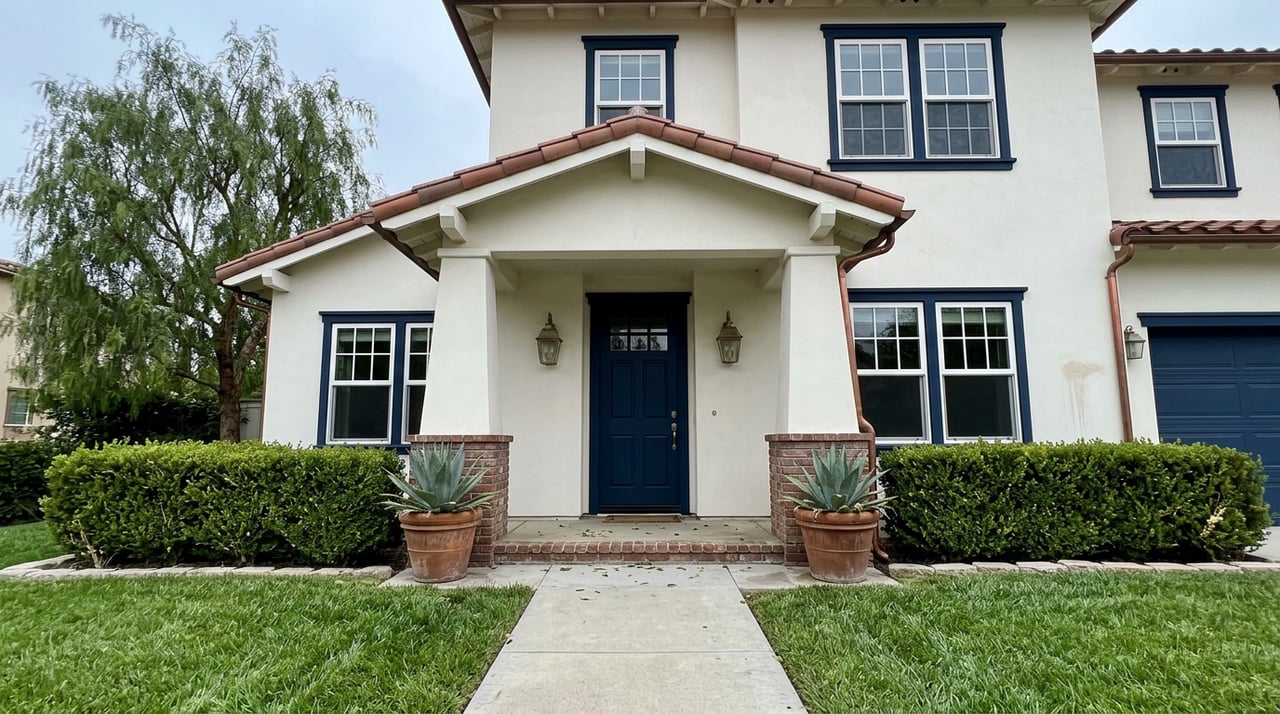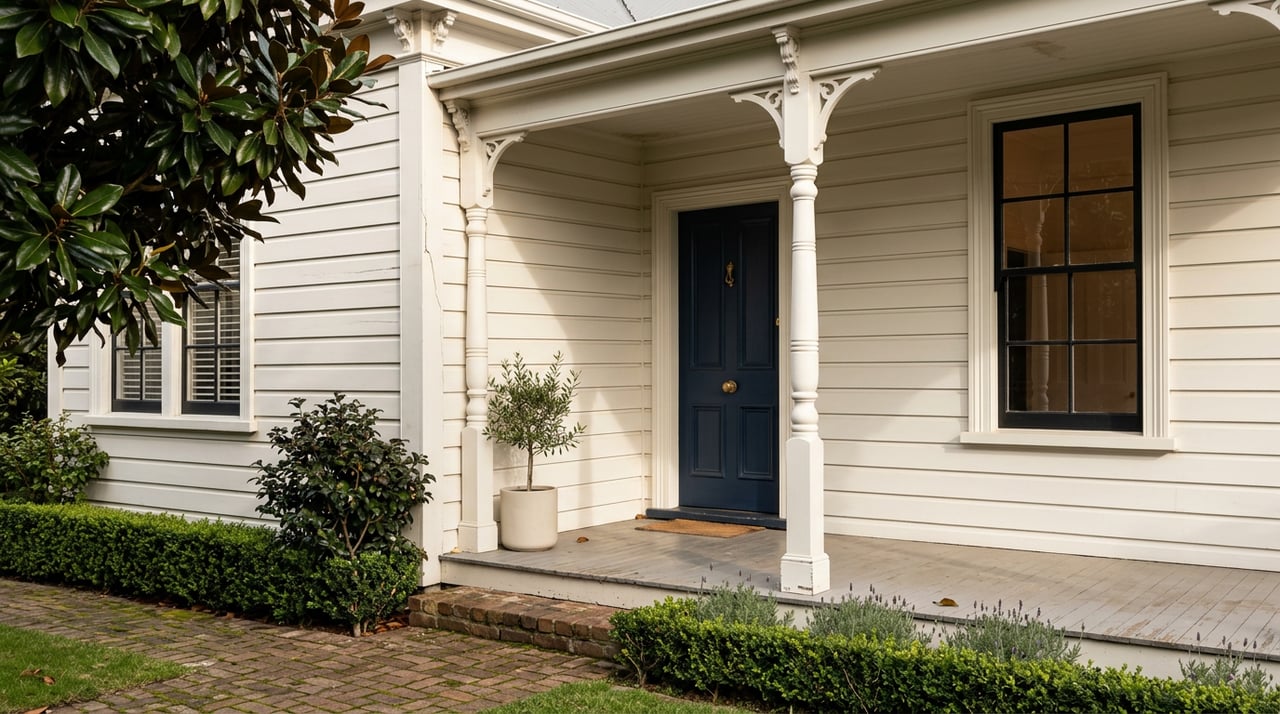
Walk a few blocks along Chelten Way or Buena Vista Street in South Pasadena and you'll pass Craftsman bungalows and Victorians sitting at similar price points with wildly different tax bills attached to them. Some carry a line in the listing remarks that reads something like "Mills Act contract in place." A buyer who hasn't shopped historic homes before reads that as a coupon: a guaranteed markdown that travels with the house no matter who owns it. That is the part almost every generic explainer gets wrong, and it's the part that actually matters when you're the one signing the purchase agreement.
The Mills Act contract itself does travel with the property. The tax benefit attached to it does not travel the same way at all.
What that line in the listing actually is
The Mills Act is a 1972 California law that lets a city enter into a ten-year, self-renewing contract with the owner of a qualified historic property. The owner agrees to maintain the home to the Secretary of the Interior's Standards. In exchange, the county assessor calculates the property's taxable value using an income-capitalization approach instead of the usual comparable-sales method, a mechanism California itself has called "the single most important economic development incentive program in California for the restoration and preservation of qualified historic buildings by private property owners."
That income-based formula is the whole point, and it's also where the confusion starts. Because the assessed value is built from a hypothetical rental income calculation rather than from what a buyer actually paid, the benefit has nothing to do with the home's list price. It has everything to do with the gap between that formula and whatever tax basis the current owner already has under Proposition 13.
The catch almost no one puts in the listing remarks
State law caps the Mills Act assessed value at whichever number is lower: the income-based formula, or the standard assessment that would otherwise apply. That single rule explains why the benefit is so uneven from house to house.
An owner who bought their South Pasadena Craftsman in the 1990s or early 2000s and has been riding a low Prop 13 base ever since often finds that the income-based Mills Act number comes in higher than what they're already paying. For that owner, signing a Mills Act contract does nothing, or in some cases makes their tax bill worse. An owner who purchased more recently, closer to current market value, is starting from a higher basis, which is exactly the situation where the income-based formula tends to land lower. Preservation consultant Graham Larkin, who works on South Pasadena landmark designations, puts it plainly: owners who bought within roughly the last decade are the ones most likely to see real savings, while long-tenured owners with low existing assessments often see little benefit at all.
Here is why that matters to you as a buyer rather than as an academic footnote. The contract is recorded on title and passes to whoever buys the property next. So the moment you close on a Mills Act home, you become a new owner with a fresh purchase-based assessment, which puts you squarely in the category of buyer the formula tends to favor, regardless of whether the seller who held the property for thirty years ever saw a dollar of savings themselves. The tax benefit effectively resets in your favor at the exact moment of sale. That's the mechanism a comparable listing without a Mills Act contract simply can't offer you, no matter how similar the two houses look on paper.
Why South Pasadena isn't like the city next door
South Pasadena is one of a relatively short list of Los Angeles County jurisdictions that participate in the Mills Act at all, a list that also includes Arcadia, San Gabriel, and Pasadena, according to the LA Conservancy's program summary. But South Pasadena's version of the program has a structural feature its larger neighbor doesn't share.
| Pasadena | South Pasadena | |
|---|---|---|
| Valuation threshold for single-family homes | Above $2.0 million requires a written statement of special circumstances, unless the home is a Historic Monument, a Greene & Greene work, or individually listed on the National Register | No valuation cap |
| Application window | Accepted early in the calendar year, contracts recorded with the County Recorder by year end | Proposals accepted in the first quarter, Cultural Heritage Commission decision by end of September |
Pasadena's threshold comes from the city's own 2026 Mills Act Program Guidelines, which require extra justification for a non-landmark single-family home valued above $2.0 million before the city will consider an exception to the valuation cap. South Pasadena's Cultural Heritage Ordinance carries no such ceiling at any price point, which means the city's most valuable historic homes, not just its modest bungalows, are just as eligible for the program as anything else on the roll, provided the property clears the designation bar.
That single difference changes who this mechanism is actually useful for. In a city with a valuation cap, a Mills Act contract is mostly a tool for mid-tier historic homes. In South Pasadena, it's available across the entire price range of the city's historic inventory, which is one more reason two homes at similar price points here can carry meaningfully different effective carrying costs depending on which one happens to be under contract.
What actually qualifies
South Pasadena limits Mills Act eligibility to landmarks, contributing properties within one of the city's designated historic districts, properties listed on the National Register or California Register, or properties the Cultural Heritage Commission identifies as appropriate with city council concurrence. Sources vary on exactly how many districts the city has designated. The LA Conservancy's community preservation page cites five historic districts and more than fifty local landmarks, while SoCal Landmarks' documentation of the city's districts puts the number at eleven designated historic district areas. Either count puts South Pasadena's historic footprint well above what a city its size typically carries, and it's why the Mills Act question comes up so often here compared with neighboring communities that have less designated stock to work with.
The city's own historic resources inventory names specific examples worth knowing if you're touring this segment of the market: the Meridian Iron Works building on Meridian Avenue, dating to the 1890s, the Wynyate house on Lyndon Street, built in 1887, and the Miltimore House on Chelten Way, built in 1911, according to the city's published inventory list. None of these are necessarily for sale, but they're the kind of designated properties that anchor the districts where a Mills Act conversation is most likely to come up during a purchase.
A local footnote that explains why this program feels different here
South Pasadena's relationship to the Mills Act is not incidental. Ray Girvigian, a South Pasadena resident and architect, is credited with substantially writing the Mills Act itself, and he later helped found both the South Pasadena Preservation Foundation and the city's Cultural Heritage Commission, according to the Preservation Foundation's own account of his legacy. The Foundation still holds a recurring Mills Act panel as part of its annual meeting, a sign that this isn't a dusty state statute nobody in town thinks about. It's a program the city helped write and continues to actively administer, which is part of why it shows up in listing remarks here more often than in most nearby cities.
What this means when you're actually comparing homes
If you're shopping historic South Pasadena inventory and a listing mentions a Mills Act contract, treat it as a question to verify, not a number to bank on. Ask for the current recorded contract and the property's actual assessed value under it, not just the seller's characterization of their tax bill. If you're the one selling a long-held historic home, it's worth checking whether a new Mills Act contract would even lower your own bill before you invest in the application, since a low existing Prop 13 basis can mean the answer is no. And if you're weighing a historic purchase against a newer build at a similar price, the Mills Act line is one of the few places where the sticker price and the real annual cost of ownership can diverge by a meaningful margin, in either direction, depending entirely on timing rather than square footage.
That kind of detail is exactly what gets missed when a guide treats every historic-home listing the same way. If you're comparing South Pasadena's historic districts against other options in the neighborhood, or trying to understand what a specific Craftsman actually costs to hold onto once you own it, Joy Realty Group has spent years working this exact segment of the San Gabriel Valley market. Schedule a consultation and we'll walk through what a specific listing's Mills Act status actually means for your numbers, not just what the marketing copy implies.
A short FAQ
Does the Mills Act tax benefit transfer automatically when I buy a designated home? The contract itself transfers and is recorded on title, so the maintenance obligations pass to you as the new owner. The tax benefit is recalculated based on your new ownership situation, not inherited from the seller's bill, which is why your own basis matters more than what the previous owner was paying.
Can I apply for a Mills Act contract on a home that isn't yet designated? South Pasadena's eligibility list includes properties the Cultural Heritage Commission identifies as appropriate with city council concurrence, alongside landmarks, contributing district properties, and National or California Register listings. If a property isn't yet designated, that designation question needs to be resolved before or alongside a Mills Act application.
Is the savings guaranteed once I have the contract? No. The assessed value is reviewed and can shift based on factors like income assumptions and expenses in the underlying formula, and the law caps the Mills Act value at whichever is lower between that formula and the standard assessment. A contract in place is not the same as a guaranteed number.